
Electricity can be used to power all-electric vehicles (EV) and plug-in hybrid electric vehicles (PHEV). These vehicles draw electricity from off-board electrical sources and store it in on-board batteries. PHEVs use electricity to improve fuel efficiency whereas EVs have no traditional fuel tank and therefore are the least polluting vehicle available in the world right now. Both light duty and heavy duty electric vehicles are now available in the marketplace.
Electric vehicles have lower fuel costs than diesel powered vehicles. The cost savings from maintenance of these vehicles is proven to be lower than maintenance costs on traditional vehicles.
Electric vehicles have lower fuel costs than diesel powered vehicles. The cost savings from maintenance of these vehicles is proven to be lower than maintenance costs on traditional vehicles.
Learn more about electric vehicles by visiting Mission Electric, our EV adoption and education campaign:
Heavy-Duty Electric Vehicles
|
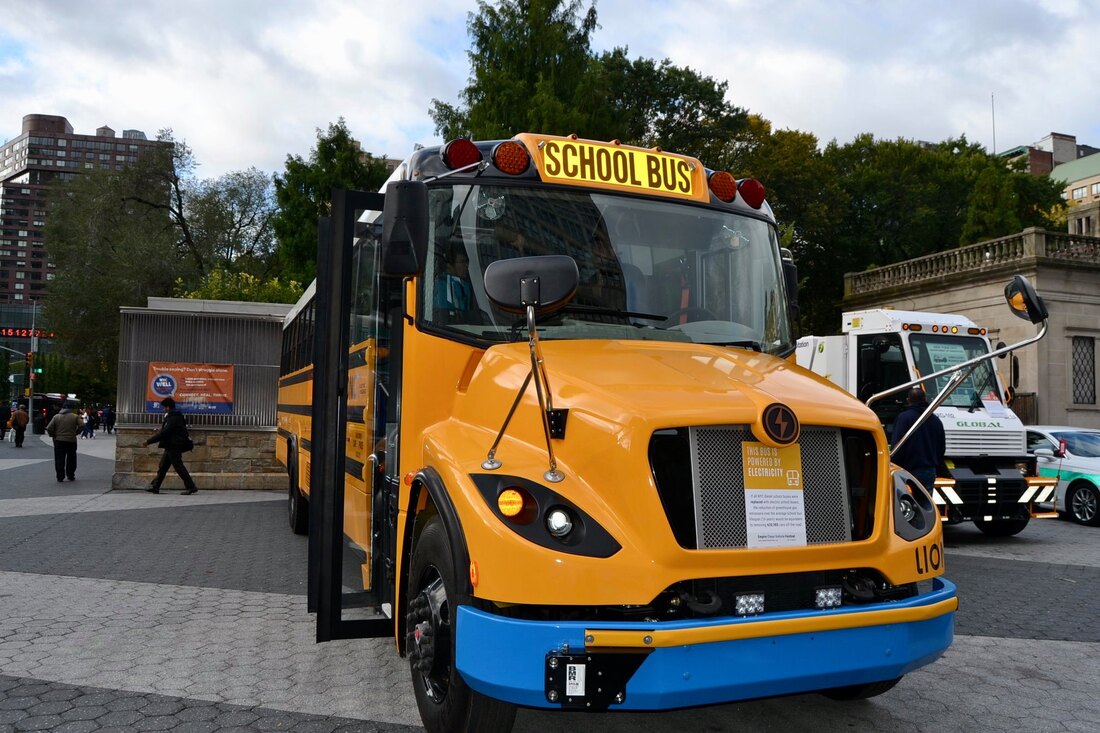
Light-duty and passenger vehicles are not the only ones who can run on electricity. Manufacturers such as Mitsubishi, Lion Electric Co., Proterra, and New Flyer make a range of electric buses and trucks, from Class 4 to Class 8.
Recharge time and fueling infrastructure looks a little bit different than that for light-duty vehicles, as do the batteries themselves. Contact us with any questions about electric heavy-duty vehicles or electric vehicle supply equipment (EVSE). |
Electric Vehicle Supply Equipment (EVSE)
Types of Chargers
|
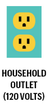
AC Level 1
Provides 2-5 electric miles/hour with 1.4-1.9 kilowatts. |
|
|
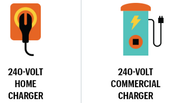
AC Level 2
Provides 10-20 electric miles/hour with 3.3-19.2 kilowatts. |
|
|
DC Fast Charge
Provides 80% charge in 20 minutes with 40-100 kilowatts. |

|
EVSE Funding Opportunities
|
Charge Ready NY
Charge Ready NY offers public and private organizations that install Level 2 EV charging stations at public parking facilities, workplaces, and multifamily apartment buildings rebates of $4,000 per charging port they install. |
Alternative Fuels and EV Recharging Property Credit
The Alternative Fuels and Electric Vehicle Recharging Property Credit is a New York State credit for investments in new electric vehicle recharging property. The credit for each installation of property is equal to the lesser of $5,000 or 50% of the cost of property less any cost paid. |
ZEV Fueling Infrastructure Rebates for Municipalities
Grants are available to municipalities to install Zero Emission Vehicle Fueling Infrastructure that is Level 2 or direct current fast charge (DCFC). Maximum grant amounts are $250,000 for any facility and $500,000 to any one municipality. |
|
ConEdison EV Charging Rate Incentive under EVSE Funding Opportunities
For businesses in New York City and Westchester County that install a publicly accessible direct current (DC) fast charger by April 2025, Con Edison offers a rate reduction ranging from 34% to 39%. The DC fast charger must have a power output of at least 100 kilowatts to be eligible. Some conditions apply. The rate cut will be in effect until April 2025.
|
ConEdison EV Fast Charging Per-Plug Incentive.
A yearly per-connector reward is available to owners of DC fast chargers who meet all of the following criteria: Minimum power capacity of 50 kilowatts (kW) in a single- or parallel-output configuration; A commonly accepted non-proprietary standard connector; Publicly accessible spaces without restriction or fees for parking. TAdditional terms and restrictions apply. Visit the Con Edison Electric Vehicle Fast Charging Per-Plug Incentive website for more information, including annual incentive amounts.
|
ConEdison EV Charging Rate Incentive
PSEG is offering Long Island residential customers a $500 rebate to install a qualified Level 2 EV charger until December 31, 2021. Funds are awarded on a first-come, first-served basis and are limited to one rebate per customer per year. Additional terms and conditions apply.
|
|
PSEG Smart Charge Rewards
When you use your qualified smart charger to charge your EV between the hours of 11 p.m. and 6 a.m., you can earn $0.05 per kWh through the PSEG Long Island Smart Charge Rewards program. Visit the for more information.
|
PSEG Long Island EV Make Ready Program
EV users who install Level 2 charging outlets at their homes can receive a rebate from PSEG Long Island. If you install a charging port in your home, you may be eligible for a $500 one-time rebate.
|
Central Hudson EV Infrastructure Make-Ready Program
Central Hudson Gas & Electric’s Level 2 and Direct Current Fast Charger (DCFC) Make Ready Program helps businesses and municipalities install and fund approved Level 2 and DCFC infrastructure. Additional funding is available for projects in disadvantaged communities. Terms and restrictions that apply. Visit the Central Hudson Electric Vehicle Infrastructure Make-Ready Program website for more information, including the participation guide and application.
|
|
PSEG Smart Charge Rewards
When you use your qualified smart charger to charge your EV between the hours of 11 p.m. and 6 a.m., you can earn $0.05 per kWh through the PSEG Long Island Smart Charge Rewards program. Visit the for more information.
|
PSEG Long Island EV Make Ready Program
EV users who install Level 2 charging outlets at their homes can receive a rebate from PSEG Long Island. If you install a charging port in your home, you may be eligible for a $500 one-time rebate.
|
Central Hudson EV Infrastructure Make-Ready Program
Central Hudson Gas & Electric’s Level 2 and Direct Current Fast Charger (DCFC) Make Ready Program helps businesses and municipalities install and fund approved Level 2 and DCFC infrastructure. Additional funding is available for projects in disadvantaged communities. Terms and restrictions that apply. Visit the Central Hudson Electric Vehicle Infrastructure Make-Ready Program website for more information, including the participation guide and application.
|
|
Central Hudson DCFC Incentive
DC fast charger owners may be eligible for a yearly incentive per connector. Owners of DC fast EVSE must meet the following requirements to be eligible: Each qualifying plug must be capable of dispensing 50 kW or more; each plug must use a commonly accepted non-proprietary standard connector; and, plugs must be publicly accessible, without restriction or fees for parking. Payments are given on an annual basis from the date the equipment is installed until 2025. Incentives are available on a first-come, first-served basis. Additional terms and restrictions apply.
|
Central Hudson EV Rate Options
Residential customers who own or lease a plug-in hybrid electric vehicle or EV can get a time-of-use (TOU) rate from Central Hudson Gas & Electric. Additional terms and restrictions may apply. Visit the Central Hudson Electric Vehicle TOU Rate website for more information, including how to enroll.
|
O&R EV Rate Options
Customers with eligible plug-in electric vehicles that participate in the Charge Smart Program and charge during off-peak hours can receive up to $450. Residential users will pay a lower price for power used during the chosen off-peak hours under the voluntary TOU rate. Visit the O&R Electric Vehicle Rates and Charge Smart Program websites for more information, including how to enroll.
|
|
National Grid EV Charging Station incentive
The Electric Vehicle Charging Station Program from National Grid provides non-residential upstate New York customers with installation and funding assistance for certified Level 2 or Direct Current Fast Charger (DCFC) EV charging at businesses, multi-unit homes, and workplaces. Additional funding is available for projects that are located in disadvantaged communities.There are some additional terms and restrictions that apply. Visit the EV Charging Station Make-Ready Program for further information, including incentive qualifying levels.
|
National Grid DCFC Per Plug Incentive
National Grid offers an annual incentive for new, publicly accessible Direct Current Fast Chargers (DCFC) for EVs with a capacity of more than 50 kW for chargers installed between 2019 and 2025. Additional terms and restrictions apply. Visit the DCFC PerPlug Incentive Program for more information on incentive levels.
|
National Grid Plug-in EV Charging Rate Reduction
National Grid offers a discounted electricity rate to residential customers for electricity used to charge EVs and PHEVs during off-peak hours. Visit the Time of Use website for further information.
|
|
Other NYS Utility Incentives
To learn about utility incentives from upstate utilities like RG&E, check out Mission Electric!
|
RG&E DCFC Incentive
Owners of DC fast chargers may receive an annual incentive per connector through 2025 from RG&E. To be eligible, DCFC owners must: ensure each qualifying plug is capable of dispensing 50 kW or more; use a commonly accepted non-proprietary standard connector; and, be publicly accessible, without restriction or fees for parking. Additional terms and conditions apply. For more information see the Rochester Gas and Electric (RG&E) DC Fast Charging Incentive Program website.
|
NYSEG EV Charging Make-Ready Program
NYSEG EV Charger Make Ready Program helps businesses and municipalities get eligible Level 2 or DC fast chargers installed and funded. Additional funding is available for projects that are located in disadvantaged communities. Additional terms and restrictions apply. For more information, including the participant guide and application, see the NYSEG EV Charger Make-Ready Program website.
|
|
NYSEG EV Charging Make-Ready Program
NYSEG EV Charger Make Ready Program helps businesses and municipalities get eligible Level 2 or DC fast chargers installed and funded. Additional funding is available for projects that are located in disadvantaged communities. Additional terms and restrictions apply. For more information, including the participant guide and application, see the NYSEG EV Charger Make-Ready Program website.
|
NYSEG DC Fast Charger Incentive
Owners of DC fast chargers may receive an annual incentive per connector through 2025. To be eligible, owners of DC fast EVSE must: ensure each qualifying plug is capable of dispensing 50 kW or more; use a commonly accepted non-proprietary standard connector; and, be publicly accessible, without restriction or fees for parking. Additional terms and conditions apply.
NYSEG DC Fast Charging Incentive webpage |
Electric Vehicle Battery Recycling
|
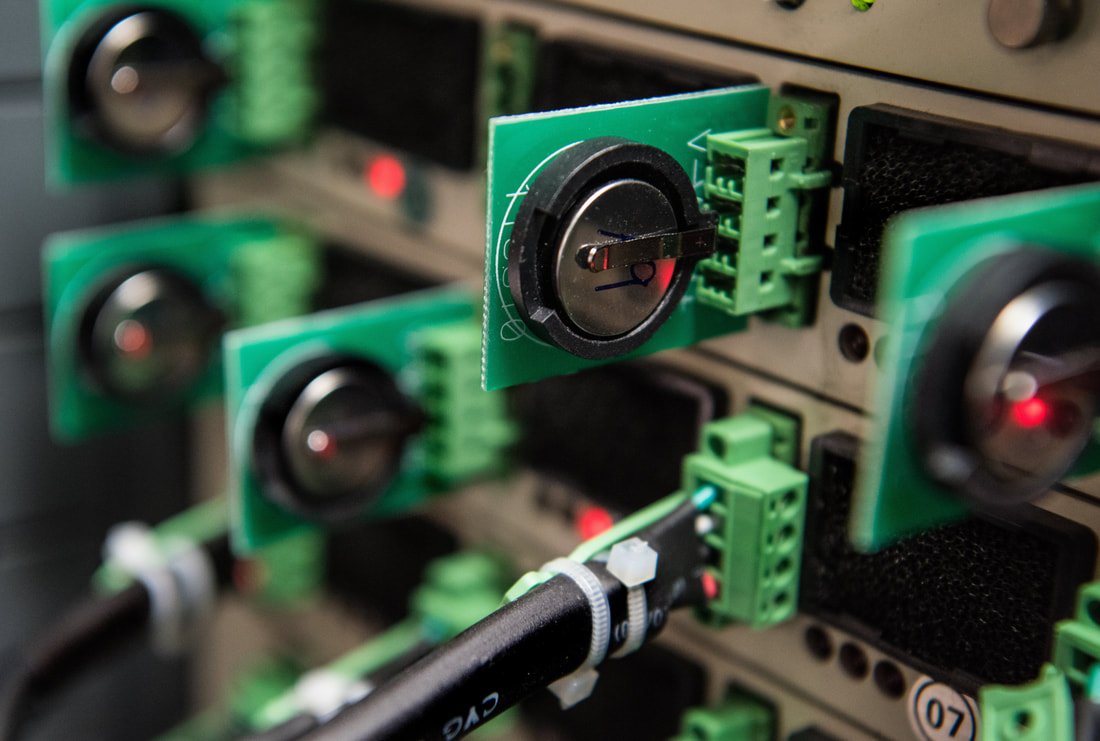
The batteries found inside electric vehicles are made from lithium-ion. As EVs become more affordable and conventional, the production of these batteries increases. The rapid development of the batteries poses a sustainability problem, with batteries needing to be replaced every seven to ten years for light-duty vehicles and three to four for larger vehicles, such as buses. However, lithium-ion batteries cannot simply be thrown out.
Batteries must be recycled, and there are currently a range of programs that efficiently and properly recycle these vehicles’s batteries. Finding ways to recycle and reuse batteries can reduce the need for additional resource extraction, which is good for the environment and for human rights. |
|
Lithium-ion batteries are complex products with a range of recycling options. Much of the recycling process and design is still being developed, each with unique advantages and disadvantages. Currently, only about 5% of lithium-ion batteries that power various home electronics and other goods are recycled. This will only increase as electric vehicles continue to gain popularity. It has been estimated that as many as 11 million tons of used lithium-ion batteries could accumulate worldwide between now and 2030.
Organizations such as the ReCell Center are actively working to develop recycling practices. The Department of Energy “sees an opportunity to de-risk the recycling of lithium-ion batteries and future battery chemistries to help accelerate the growth of a profitable recycling market for spent EV and electronics batteries.”
Organizations such as the ReCell Center are actively working to develop recycling practices. The Department of Energy “sees an opportunity to de-risk the recycling of lithium-ion batteries and future battery chemistries to help accelerate the growth of a profitable recycling market for spent EV and electronics batteries.”
Find a charging station near you:
Loading alternative fueling station locator...